Hearth-ache

Hearth-ache (n.) /hɑːθ eɪk/

The pain and stresses of trying to work out where to place your stove and constructional hearth in order to comply with impenetrable building standards documents and reams of technical sheets from the stove company.
.
Matt the architect was effecting a very successful poker-voice on the phone. But I just know he was thinking ‘I told you so’. He might not have said it out loud but I know if I was him I would be singing raucously to myself ‘I told you so i told you so ITOLDYOUSO!’. Fortunately for me, given the misadventures on this project, every professional involved with this project has remained entirely discrete on matters of how they think things are going, and Matt is fortunately of that ilk.
.
This conversation was an attempt to discover a miracle substance I could use to make my constructional hearth. It had to be an insulator, have a really high compressive strength and also be non-combustible.  The internet couldn’t provide me with many ideas. The stove company suggested a mixture of perlite and concrete. But I couldn’t find any figures on how insulating this would actually be.
.

The first decision, of course,  is whether you actually need a constructional hearth in the first place. This depends on the stove, and the temperature that the area under the stove will reach. The stove manufacturer will indicate whether you need a constructional hearth and, for our inset stove, we did. More about choosing the stove here.

 .
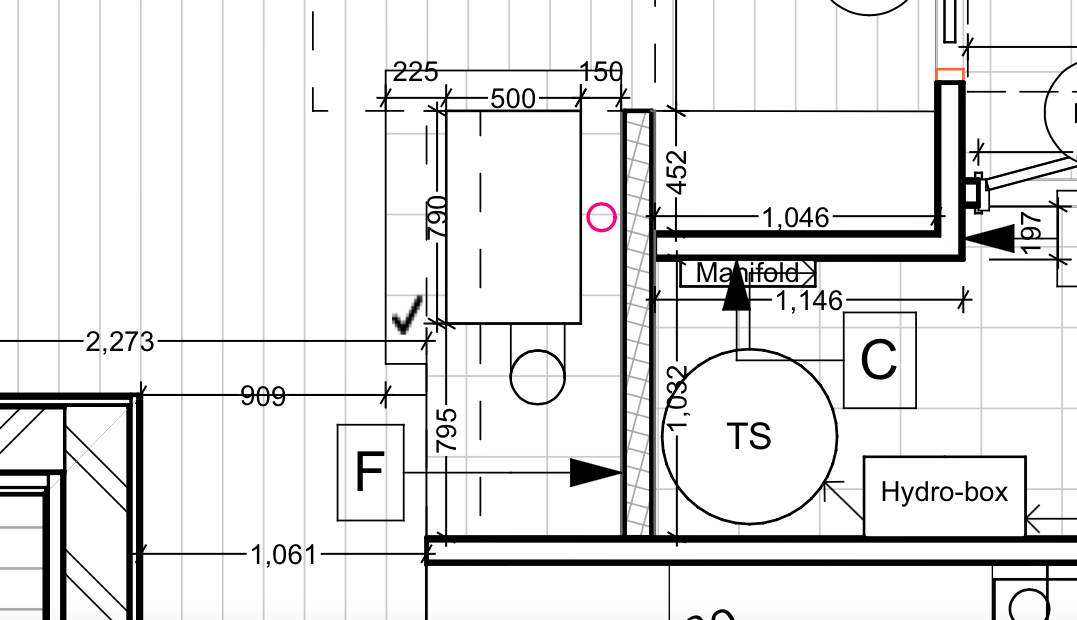
And the reason that I would have been chanting ‘told-you-so!’ At top volume if I were Matt?  Well it was because in his original designs the concrete floor was laid on top of the insulation. This would have meant that the constructional hearth (at least 250mm  non combustible material under the stove) would have had insulation underneath. And cold bridging would not be a problem.
Screen Shot 2015-10-11 at 21.58.39
With the insulation and concrete reversed (for the very sensible and pragmatic reason that it was recommended by the builder and it made it considerably easier to get the house built) it was a bit more of a challenge.  What I needed was a material that could form part of the constructional hearth but was also an insulator.
 .
Fortunately Matt had an idea – try Foamglas he said. I called the very helpful chap at Foamglas who talked me through the various types and what would be best for my situation.
 .
We decided to get 100 deep Foamglas to maximize the insulation (it has roughly half the lamda value of kingspan) and then allow the screed to fill in the space so it was 80mm thick. A 50mm concrete slab on top of that would give the belt and braces for building control of at least 125mm concrete under the stove.
 .
I bought a box of Foamglas sheets and also a box of Foamglas perinsul- to go under the masonary wall that was to go at the back of the stove. Peninsul has a really really high compressive strength so can go under even load-bearing walls.
foam glas
An engineer friend was kind enough to do some calculations for me on the back of the envelope and, although he said that Foamglas sheets with a compressive strength of xx would be plenty strong enough to support a masonry wall and certainly the stove, it would be sensible to use the perinsul with a compressive strength of 3200 for under the masonry wall.
 .

The size of the constructional hearth and the superimposed hearth was the other puzzle. The question of using the manufacturers instructions (generally German building standards for a German stove) or Scottish Building Standards. And to confuse event further, the area of the superimposed hearth is not the same as the area and position of the constructional hearth.

.

I could write reams of utterly boring blurb on calculating the size of the various hearths so I’ll spare you that (there a bit more in this blog). But I’ll tell you that I did read the building standards documents, and the stove technical documents, to within an inch of their lives (I even had to call the German offices of the stove manufacturer to get the answer to a couple of my questions that the stove retailer couldn’t answer) and eventually managed to get my head around them.

.

In the end I had a plan. It was all a bit time-dependent, as usual, as Builder#1 was about to put the underfloor heating and screed floor in.  But, of course, nothing is simple when you are piecing together lots of different builders to do different bits of the build. Builder#3 was to put in the masonry wall that would be behind the stove and mortar down the Foamglas before the floor came in. I called him a few times just to be sure it was all go.

.

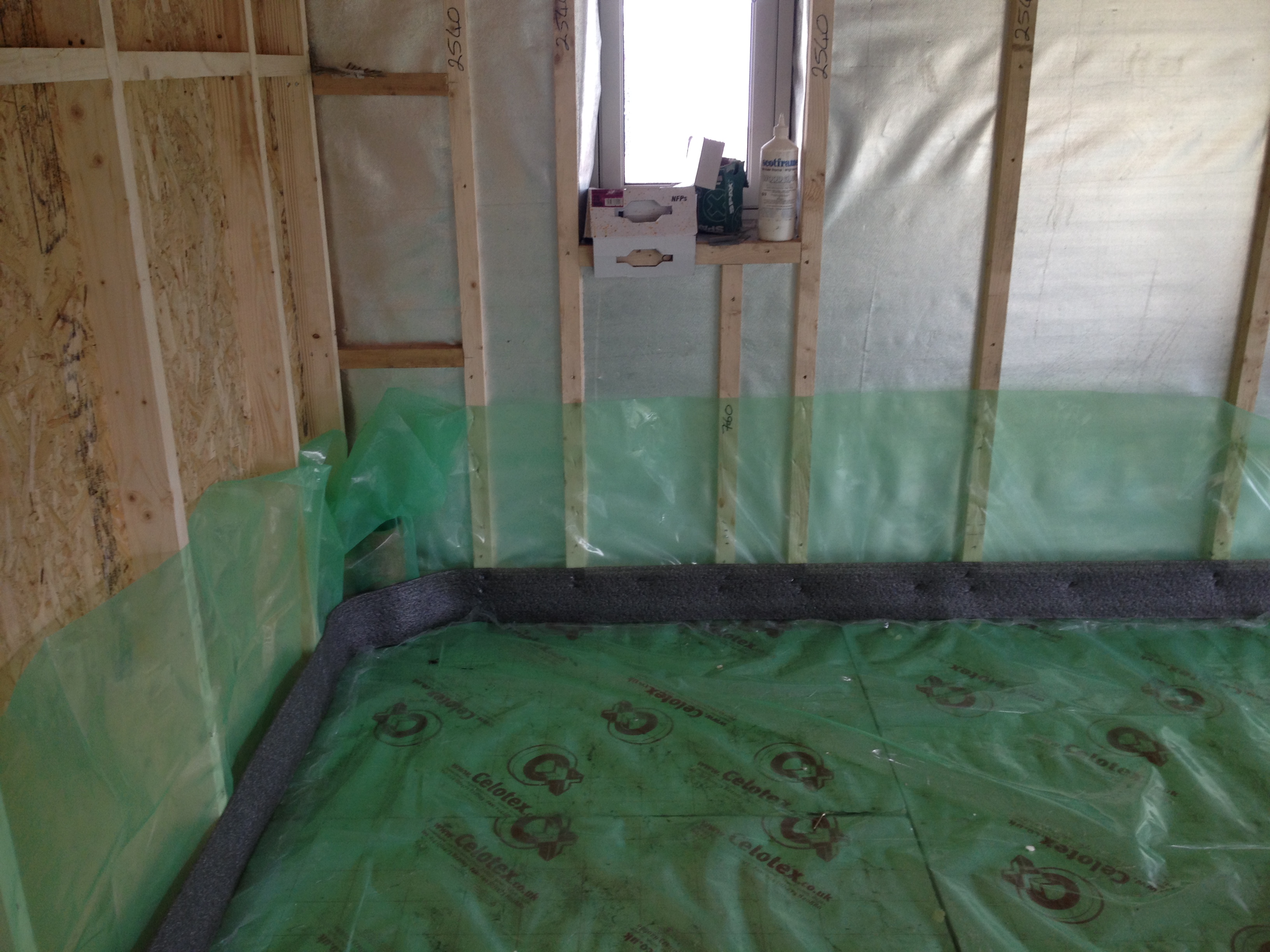
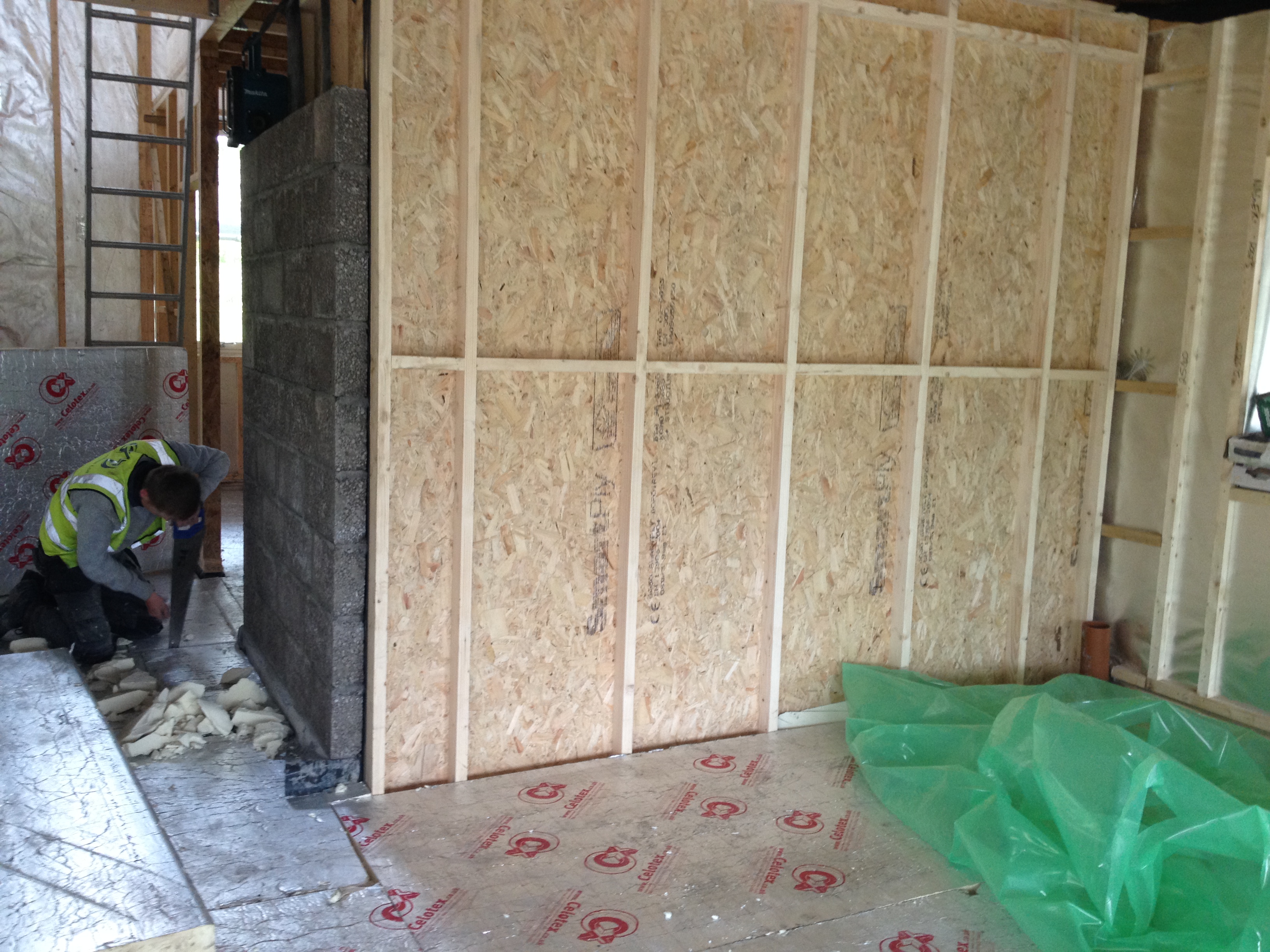
I arrived on site one Monday morning at the very moment that the insulation was going down with a membrane on top, ready for the screed coming in the next day. The first thing I noticed was that the masonry wall was in, with the Foamglas Perinsul underneath, but the Foamglas for the hearth wasn’t there and the Kingspan insulation had already been laid down.  The plastic sheet was just being laid down and stapled up the walls ready for the underfloor heating and the screed to come in.
IMG_0112_2

Fortunately it was just in time and they took a saw to the Kingspan and the Foamglas and put it in (phew). The screed came in over the top and then a 50mm concrete slab cut to size went directly under the stove.
IMG_0104

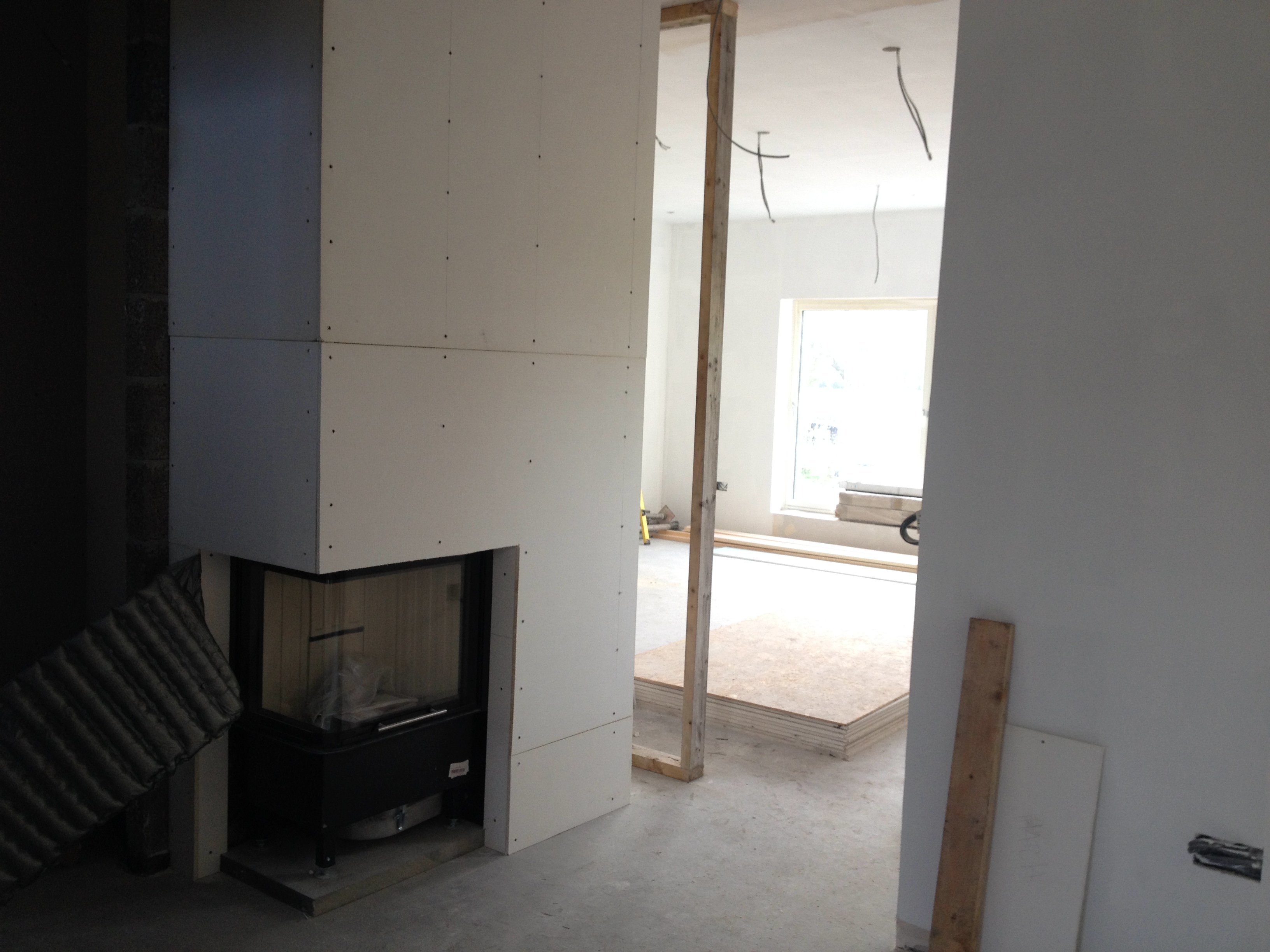
That was bit was not without mishap (what isn’t) but it all went in well and now the stove is in and fits and I am glad I went through all the Hearth-ache of working it all out. If anyone else wants to put in a constructional Hearth, I’m your woman to ask…..well perhaps not.

.

Here’s the definitive blog on the stove
Builder saga again

I wrote this a few weeks ago but now the build has progressed far enough along the way for me to start looking up and posting a few blogs I wrote before.
 .
Oct 2015
For the past three weeks the house has been forlonly sitting in its half plasterboarded state. Builder#4 went on holiday, (see blog) already 3 weeks over with the plaster boarding with no prospect of being able to complete even on his return. I postponed floor, kitchen, building control visit. There’s a possibility that Builder#3 will be able to pick up the pieces (again), but he’s on holiday too. And for three weeks.   It’s been total torture sitting about waiting to find out what is going to happen with everything on hold.
 .
Well sort of.
 .
Having to finish off this house and all the challenges that it has thrown up has coincided with some of the busiest times at work and in the rest of life. So the house anxieties rumble along in the subconscious, giving me a general feeling of disquiet, and rising to the surface from time to time, usually at 5am when I awake in panic and make a list of things to do before dropping back to sleep. But the rest of life crowds in to distract me, in some measure, from the irritations of waiting.
 .
As if to create a looking-glass world where everything is sunshine, joy and beautiful vistas, in contrast to the humdrum toil, interspersed with panic, of house building, this has been a magical autumn of work visits to some of the most beautiful places in Scotland. It’s been a welcome contrast and a distraction to trials at the build with Builder#4 and the plasterboard.
 .
My role in RSPB Scotland is more often than not about emails, slaving at a computer and meetings in airless rooms, but it’s not all like that and I’ve spent more than my fair share of time over the past couple of months at such uplifting places as Loch Lomond, Islay, Perthshire, Dumfries and Galloway, the Isle of Cumbrae and Loch Lomond again. It’s been amazing, uplifting, productive but, because the job doesn’t go on hold when you’re away from the office to run a workshop at Loch Lomond, or a site visit in D&G, getting all the other stuff done has been a little bit stressful.
 .
But to top it all, This week has been the week of doom. This week I have to pull things together and sort out what’s happening with the house. I’ve sent a holding email to Builder#4 while I’ve been waiting until Builder #3 to gets back from holiday so I could decide what to do. However while they have been away the electrician pointed out that I need a completion certificate for the feed-in tariff claim and the FITs are decreasing 87% in January so I had to get a move on.  The renewables incentives come to an end in January, so if I don’t have my building warrant completion certificate by then It will be a bit of a financial disaster (it later transpired that the EPC is needed for the completion certificate – see blog).  However  it did work to put a rocket up the proverbial back-side to try and get things done.
 .
It was clear in that pre-holiday debrief  with builder #4 that he would struggle to finish, so it all rests now on whether builder#3 can achieve it.
 .
So, like freshly interviewed candidate waiting on the offer of that dream job, or starry-eyed teenager waiting on a phone call from the crush, I wait for the builder to respond to the  unseemly number of texts I’ve sent him. Up until the past few weeks I have managed to keep work stress and build stress entirely separate and compartmentalized. However with the time urgency added this week, it has started to get rather distracting.
 .
However, in the spirit of nothing being lost to potential usefulness, even the bad stuff, it acted as a rather timely illustration in a training course I was delivering to colleagues that day, by coincidence, on stress and resilience.
 .
In the end I resort to emojis – desperate measures-  one might say.
 .
And in the end he calls. During the aforementioned training course.
 .
Only half an hour after discussing the impact of external stressors on our resilience to workplace stress, mentioning, by way of an example,  how waiting for a builder to call could add to the already slightly stressful activity of leading a training course,  I excuse myself, leaving my co-trainer ably in charge for a few moments.
 .
In probably the most anticipated and eagerly awaited phone call in the history of telephony (well perhaps not including that very first “Mr. Watson–come here–I want to see you.” phone call from 1876)   I discover that Builder#3 can indeed  come to the rescue. I’ll find out more when he goes up to the house on Monday.

Fired Up, then Burned Out: the excitement and exhaustion of choosing a stove

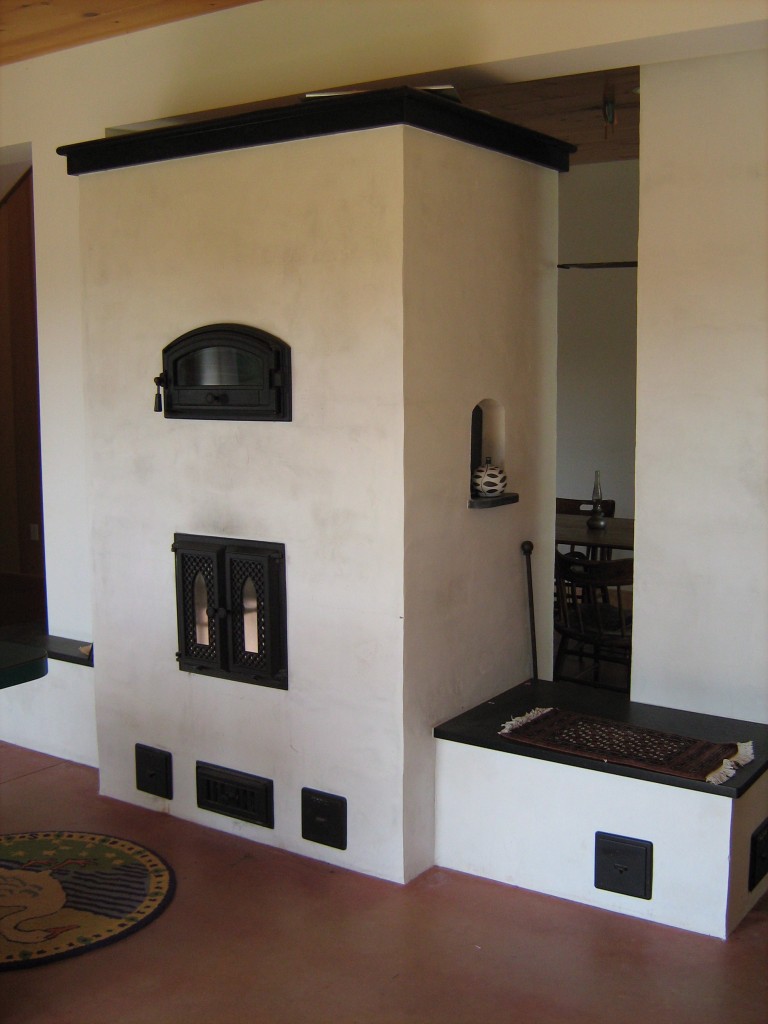
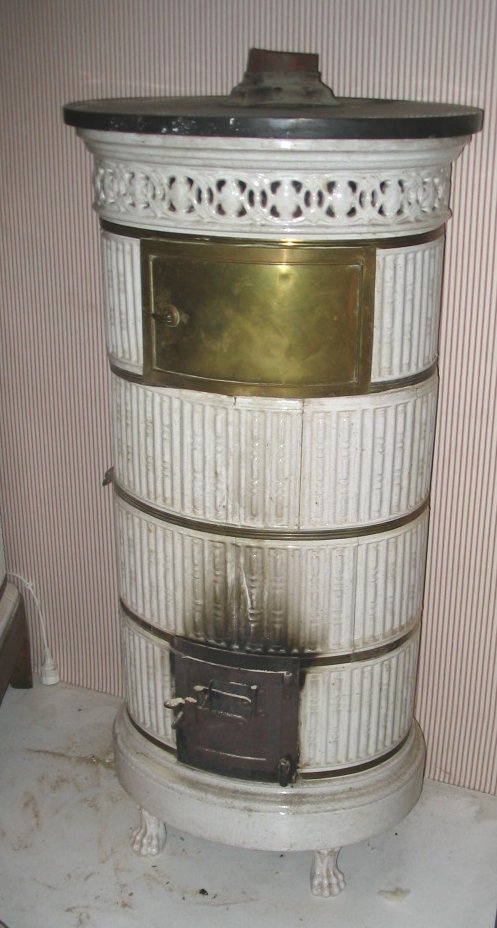
It was supposed to be a masonry stove. Being married to a Swiss I’ve spent quite some time in Swiss houses, old and new, that are heated by tiled or plastered masonry stoves. tiled stoveIn a tiny and ancient log cabin built by the cow-herds taking their cows to high pasture on the alps, a half-way overnight stop in a meadow in the forest, there was a small tiled stove with a bench to warm your bottom on. In a new house built by parents of our friends, a masonry stove bisected the space in the corner of two rooms and a corridor. Logs were loaded from a door in the corridor, burnt short and hot morning and night, and the heat circulated through a maze of masonry within the walls of the stove kept the house warm all day and night. brick oven

Wouldn’t it be lovely to have a masonry stove? A thermal mass in the middle of your home warming from the heart, somewhere warm to snuggle against? So we found a spot right in the middle of the house for the stove and I started on some research. Getting a masonry stove in the UK is evidently rather more challenging than in Switzerland where it is quite standard. I spoke to a couple of people who make stoves, but getting plans for something that would be likely to make it through building control seemed a distant prospect. The process of building control already seemed to be dragging on practically for ever, with waiting for Scotframe to get back to us. I decided to just put in for building control with a basic stand-alone stove made of soapstone so we could at least get started on the building. Then I started looking at alternatives that would give us a stove set into the wall.

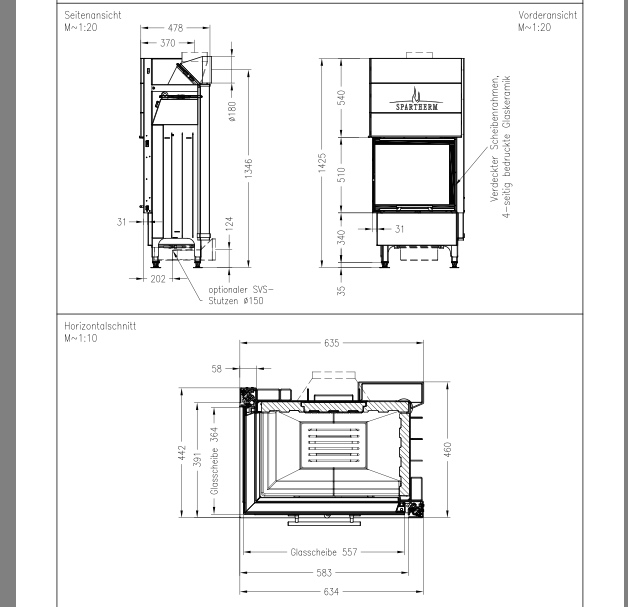
I started looking at stoves. An issue was that the space allocated to the stove was quite restrictive and I needed to find a stove that was relatively slim and also and also had the possibility of the flue coming out of the side, so we could keep the flue run going through the cupboard in the upstairs bathroom which had been allocated to it.

IMG_9936

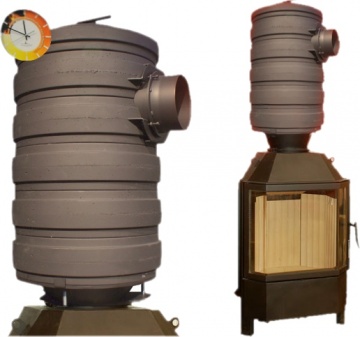
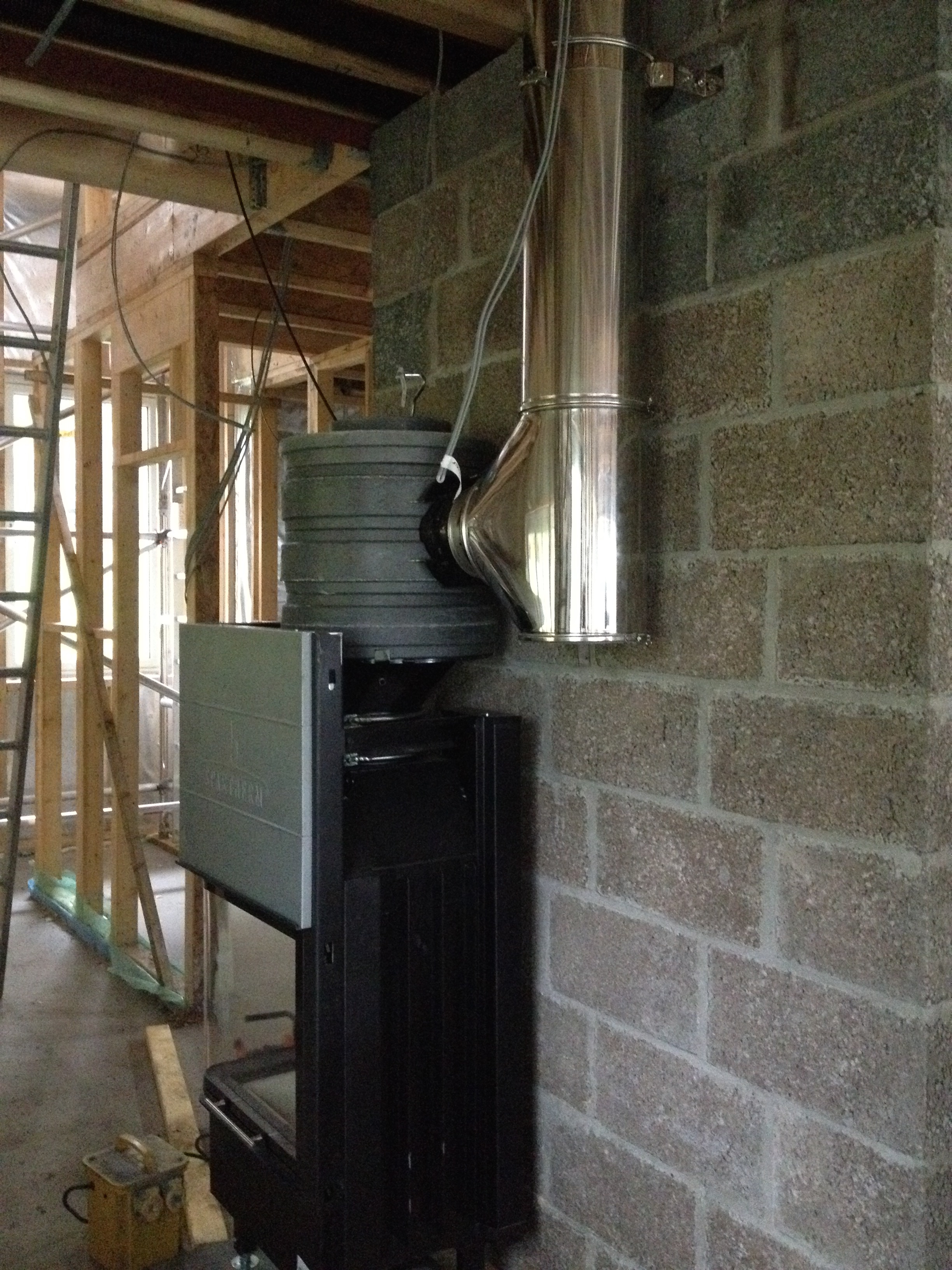
It was a bit of an ask but I discovered Spartherm stoves were what I was looking for as they had a heat storage device called a Helix, for taking heat out of the hot flue gasses and storing it. This also meant that the flue could come out of the side of the helix so it would fit into the space allocated for it. I started with a local stove company, The Scottish Stove Company in Croftamie. I needed help on working out the constructional hearth and distances between the stove and the flue as my head was just about popping off with all the complicated guidance and figures. Trying to find out the distance between the centre of the stove and the centre of the flue when attached to the helix was a feat of determination. The distances weren’t on the technical documents for the stove or the helix and, even when I called up the company in Germany (nearly having to enlist the husband to speak German) they couldn’t locate the measurement I was looking for.

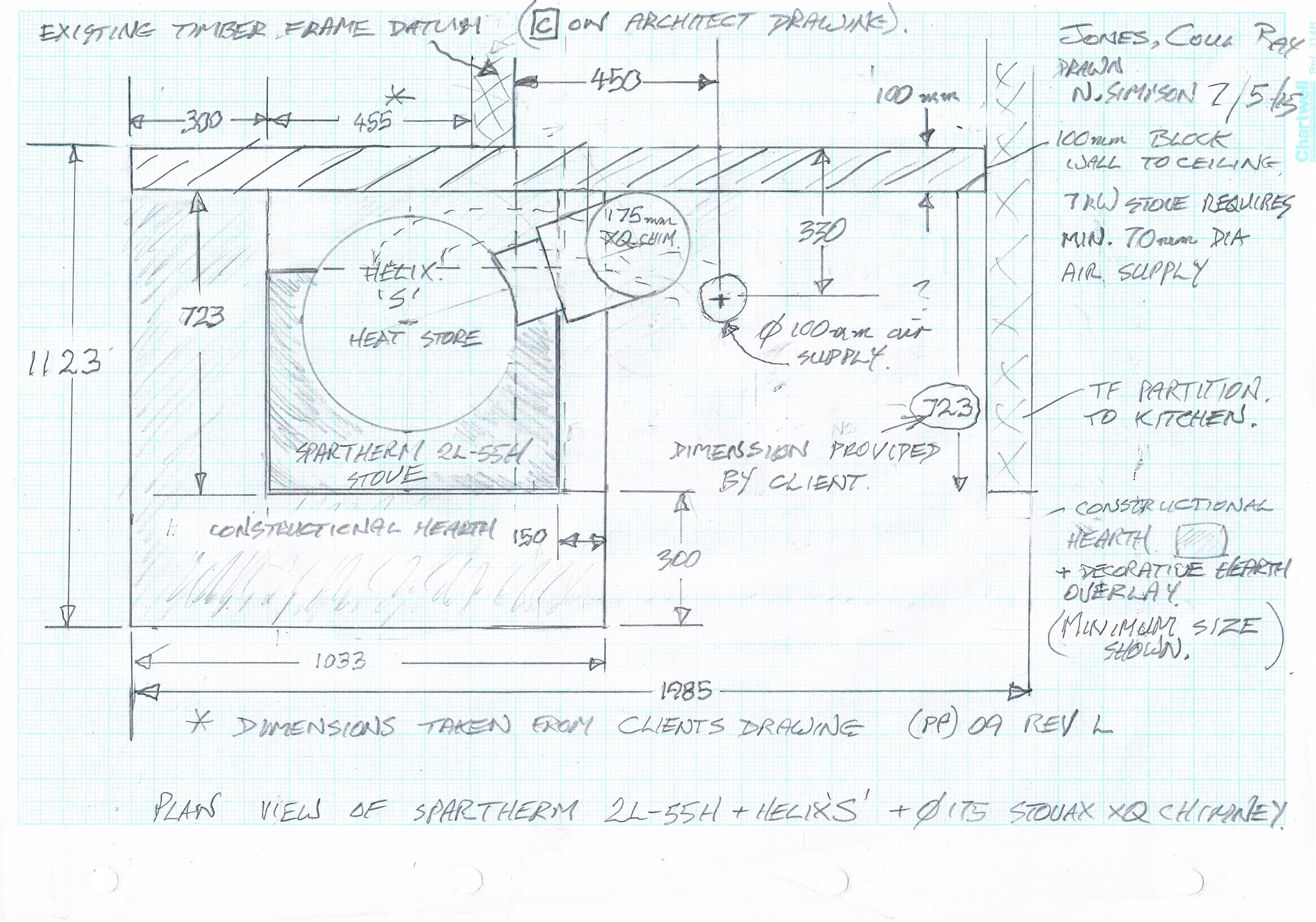
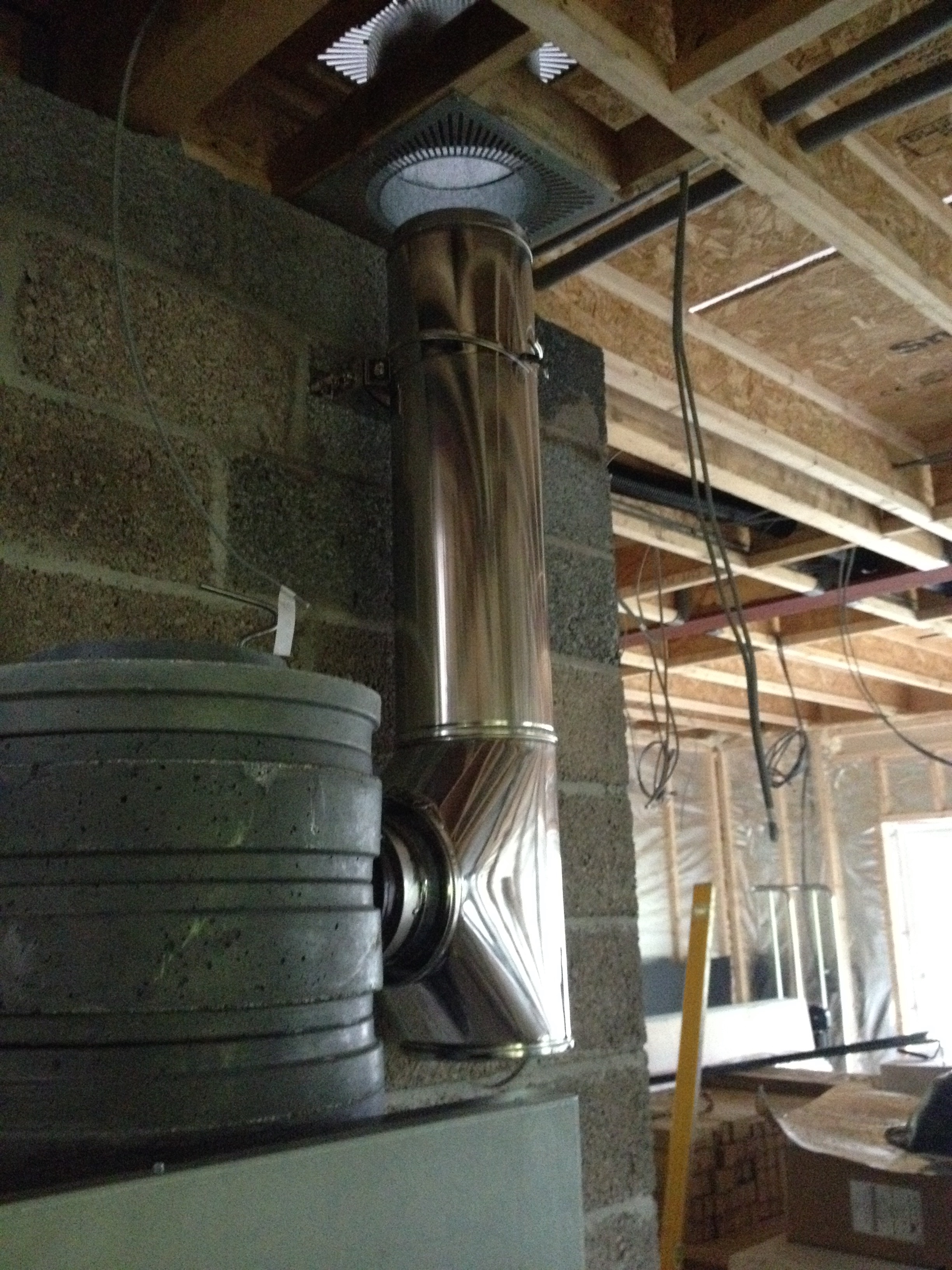
IMG_8992So despite me calling the Scottish Stove Company numerous times and popping in a couple, they weren’t really able to answer my questions so I shifted to Kinross Stove company who had the option of an engineer to come out to site which was helpful. I was, by now, at the stage of the build where I had gone from trusting, unquestioning ‘they are all professionals and know what they are doing’ to a position of blossoming control freakery. When I received the diagram from the stove engineer I sent it back twice due to mistakes (firstly a misprint in one of the measurements, and secondly because the sketch assumed we would have the superimposed and the constructional hearth the same sizes, when I had asked for the minimum size of each). I then discovered, when getting Jamie the MVHR fitter to move his pipework slightly to make way for the stove flue, that the stove engineer hadn’t allowed for one of the rafters in the roof SIP panels that was square in the way of the flue run. The flue needed to be at least 50mm from this rafter.

IMG_0328

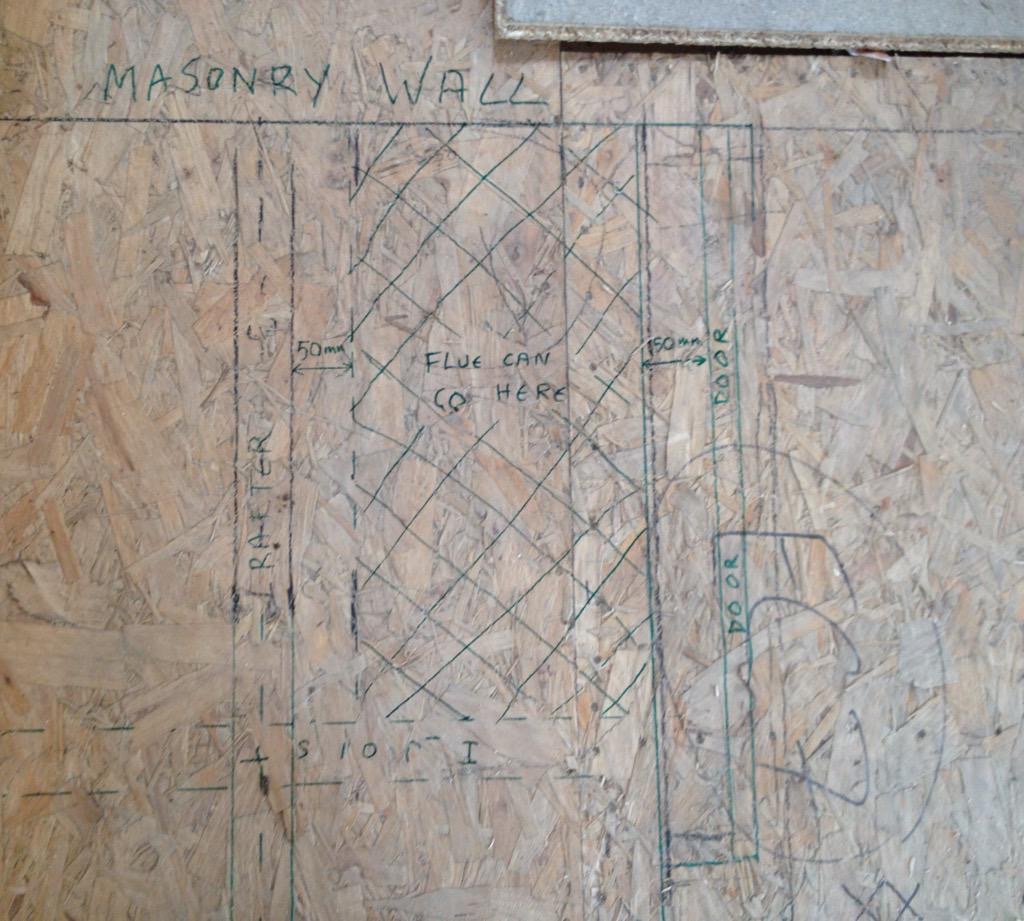
Jamie and I spent a while marking out on the floor the various constraints on where the flue could go: Masonry wall at back, joist at front, rafter in roof to north and extent of cupboard containing the flue to the south. It left a tolerance of 20mm at each side of the flue for where it could go. I went back to the stove technical details, it seemed that it would fit, but I wouldn’t be sure until the stove arrived.

IMG_0705

Marked out on the floor – the hatched area is the flexibility for the stove flueIMG_0706
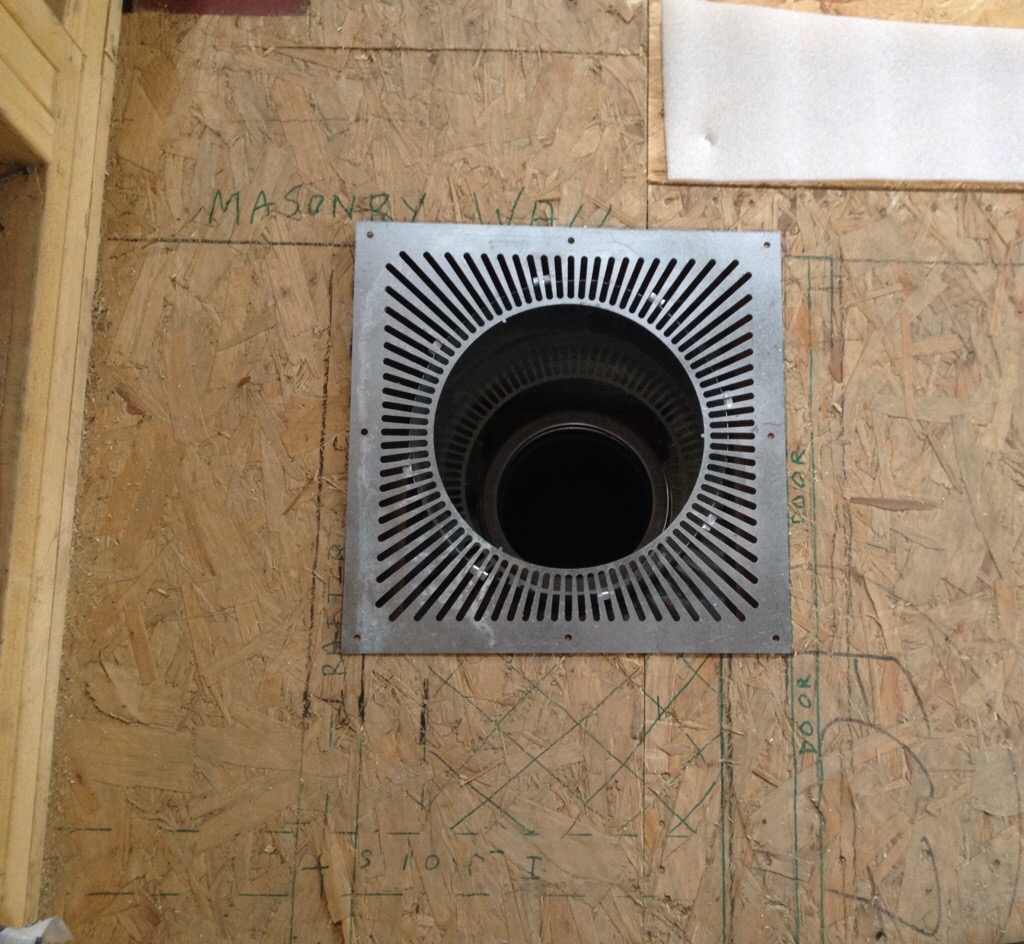
And look! It miraculously fits

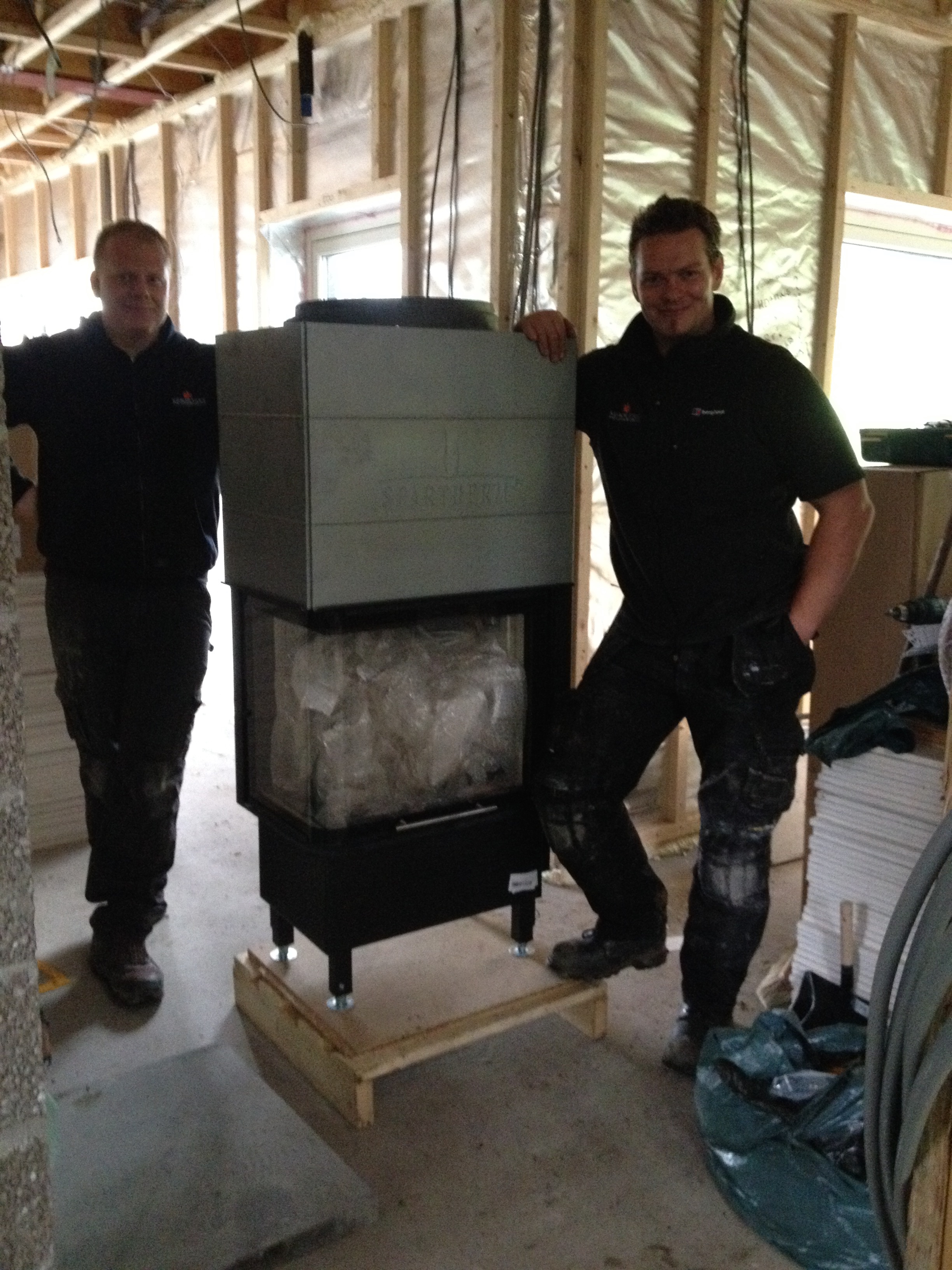
When the stove arrived it was massive. It came with two massive guys; Matt from Poland and Verek from the Czeck Republic. They were among the most efficient, practical, polite and effective people I have ever encountered. They’d solved the problem of how to get the hefty stove into the house round the piles of plasterboard on the floor in 10 seconds flat and before I’d even noticed, it was in the house.

IMG_0688

I buzzed about them measuring and getting in the way, the amount of thought that had gone into the position of the stove was mind-bloggling so I was determined it went in the right place. The flue didn’t quite fit through the allocated space so Verek got out his angle grinder. Sparks flew.

By the time I had left the flue was through the ceiling and exactly in the position allocated to it (phew!).

The air supply was also attached successfully, to my great relief. While we were doing the foundations the position of the air supply for the stove was a bit of an after thought. The house is very well sealed and has a Mechanical Ventilation Heat Recovery system for ventilation so the stove needs to have its own air supply. The stove burns in its own column of air, sealed from the rest of the house, coming in by pipe under the foundations and going out of the flue. It was almost the last thing that Stuart needed when making the foundations – the question of where the air supply should come out. Eventually it was decided and we sent the plan. But Stuart mistook the position of the flue for where the air supply should come out and it was something I’d been a little worried about ever since. It turned out that, for the stove chosen, this was actually a far more suitable spot for the air supply than the one we’d specified.Untitled

The installation went so smoothly and Matt and Verek were brilliant. I had emphasised the importance of sealing up the envelope of the house once the flue went in and it worked perfectly with coordinating with the slater who fitted the flashings and they sealed up all potential for air coming into the house from the outside world.

Altogether, despite the sheer torture and mind-churning preparations and planning I did for the stove, the installation turned out to be calm and smooth-running, apparently free of mishaps.  My recommendation to the Kinross Stove Company? Get Matt and Verek to advise on which stoves to fit and sizes and stuff before they arrive to save people like me’s head exploding messily as they try and work it all out from building control manuals and inadequately dimensioned technical drawings.
IMG_0702 IMG_0703 IMG_0704 IMG_1270

Builders and Building Blog (part 3)

Previously in Cuil Bay’s cladding saga ….. she eventually manages to find a builder who can put the cladding on the house and, after discovering that all the windows are set in the wrong position and fixing it, they get started…

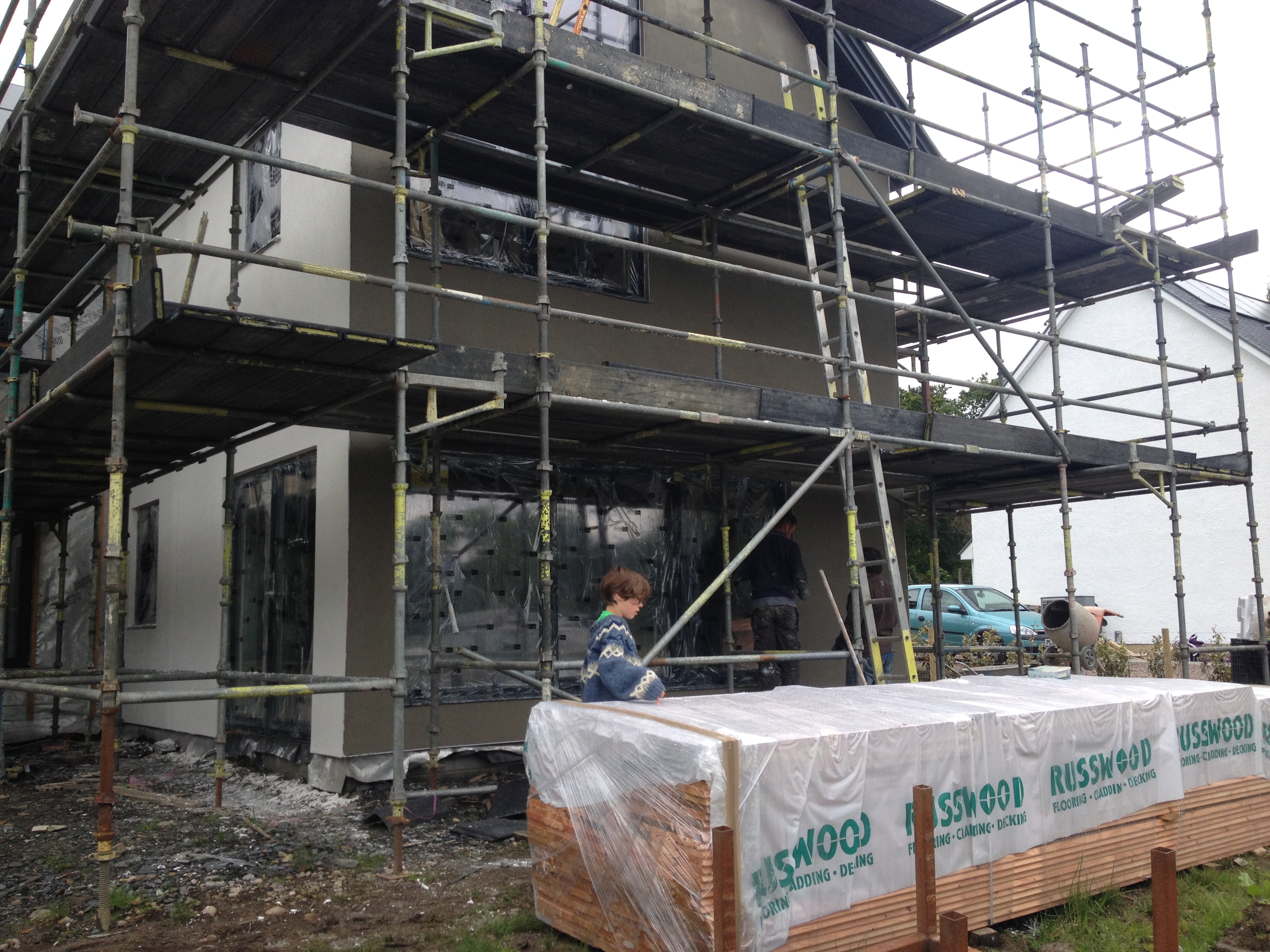
There’s not a huge amount of drama and disaster to write about the cladding. It all went smoothly (but Stephen told me that, in contrast to the smooth look of the render, it went on about as smoothly as a bucket of long-masticated chewing gum). There was a bit of discussion about the detail of the render and the architect drew some more drawings. The batons went on first, all around the house. And then the boards.

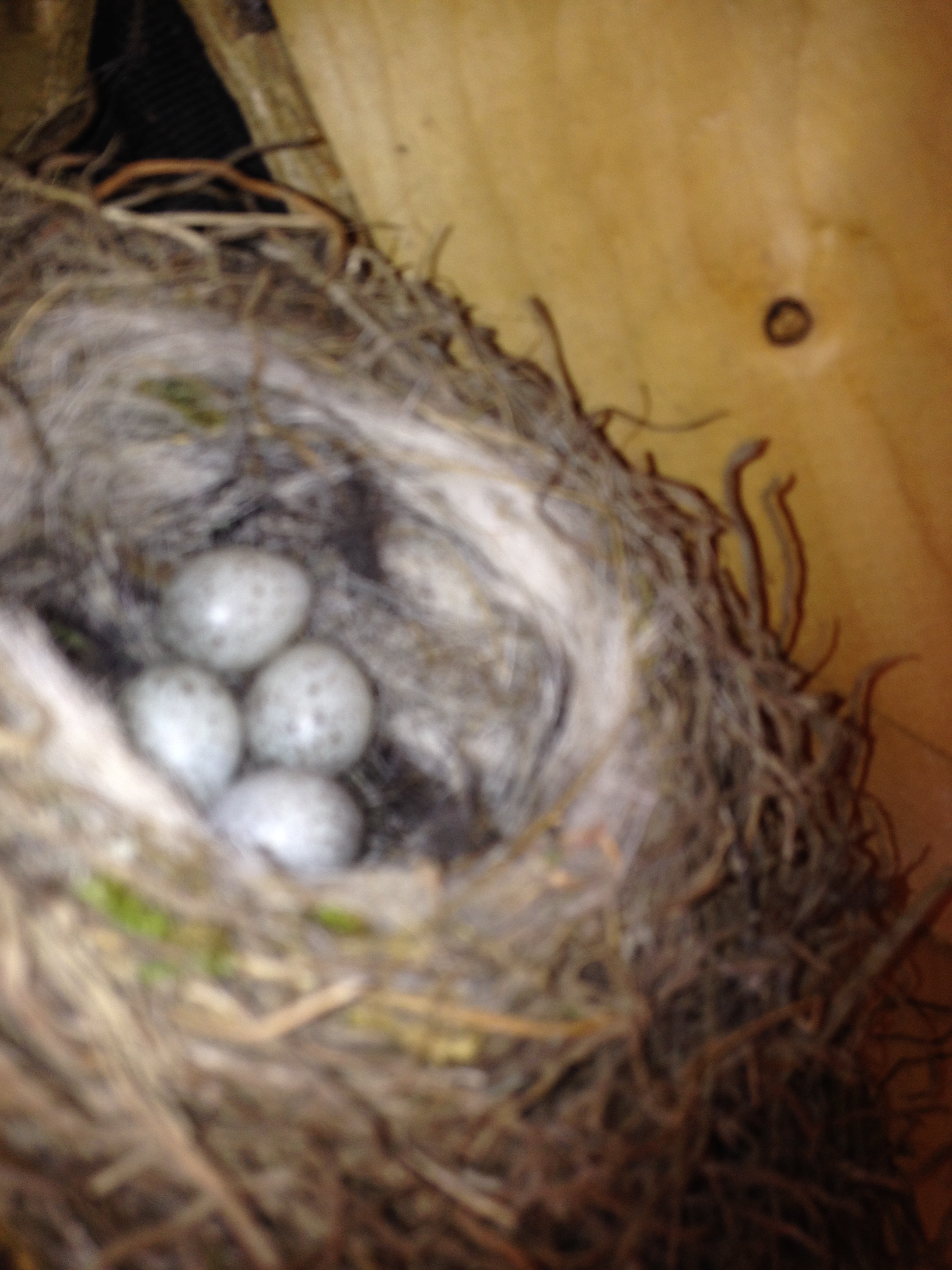
IMG_0456For some reason there was a void of around 20cm by 30cm under the eaves at one corner of the front gable. The plan was to fill this with a piece of insulation before the boards went on. However, before this could be done, I discovered that a pied wagtail had set up nest in the hole. A clutch of 8 beige, speckled eggs were hidden under a flap of the silver membrane. Around the back a pair of House Sparrows were nesting in a hole.

pied wagtail eggs in house

Now you may already know that I absolutely love birds. I joined the Young Ornithologists club aged 5, was a dedicated member of the Heath House YOC for more than a decade (never missed a meeting) spent my teenage years on shingle spits and in gravel-pits with a pair of binoculars and volunteering as a warden on RSPB reserves, did a PhD on gulls, and now I even work for the RSPB.

My first reaction when I found them was delight at the prospect of baby wagtails in my house, followed swiftly by abject dismay, followed even more swiftly by guilt for feeling dismayed. It was going to put back the cladding.

I went to look at the nest. The adult flew out when I lifted the silver membrane. She flew back in quickly after I descended from the scaffolding. Pied wagtails have an incubation period of 13 days and a nestling period of 14-15 days. This gave a maximum of 28 days until they left the nest. I spoke to the guys doing the render. They would put on the cladding on all around the nest area and leave that board until last. The house sparrow nest wasn’t visible but there was no cheeping coming from the nest, they were on eggs. The sparrows were in an area of the house destined for wood cladding which would be coming a little later.

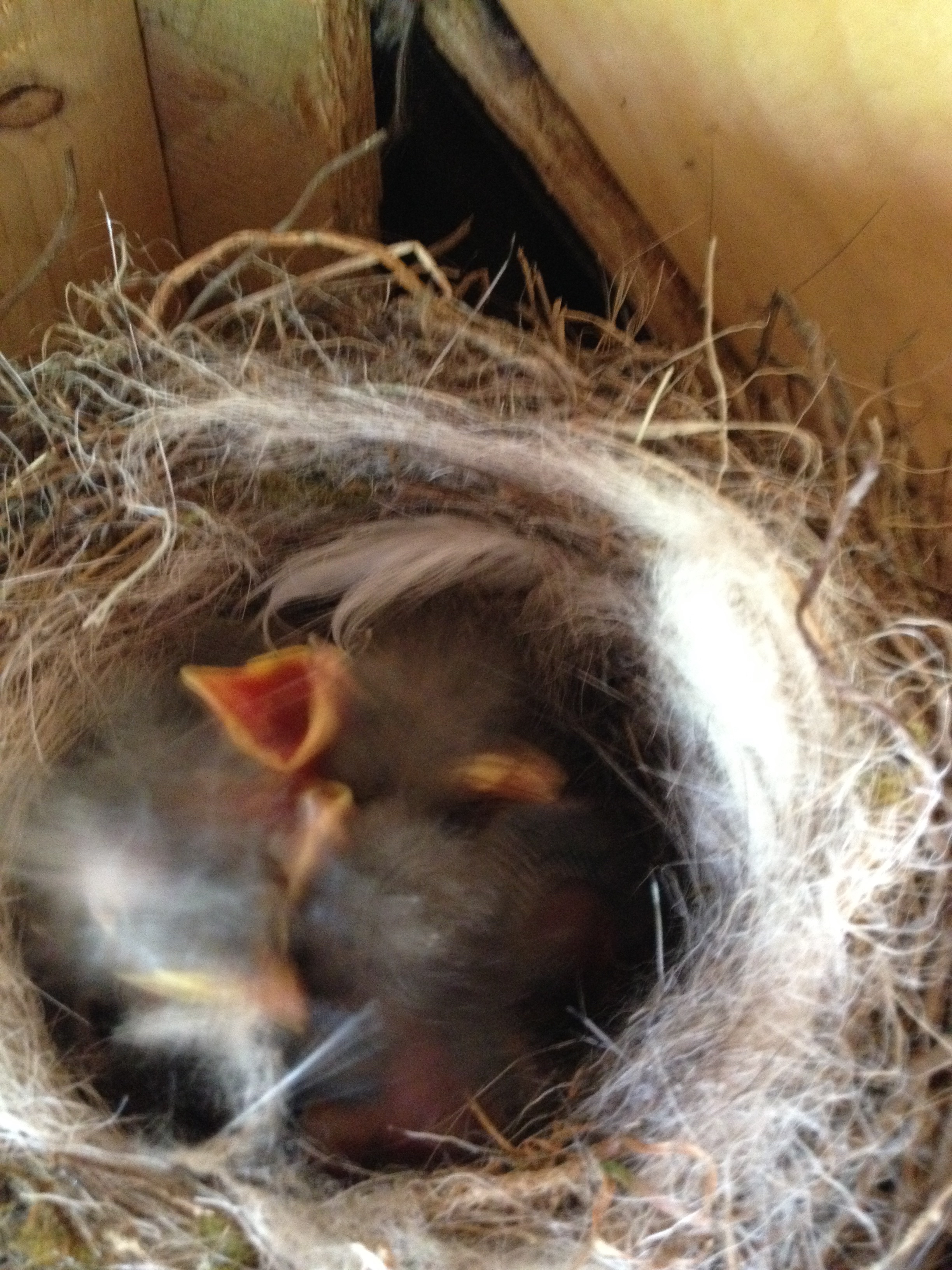
pied wagtail chicks in a house

The next day at work I went to speak to my colleagues, the conservation officers. They are the people who speak to people calling up to ask about what to do when birds set up nest in their half-built homes. I wanted to explain to them a little of how it feels to find that a bird nest will put back your build. I hadn’t been much inconvenienced as it wasn’t going to put things back much and it wasn’t costing me much extra (perhaps a bit of extra scaffolding hire, but it was very little compared for the other reasons for delays) I also love birds. However I could generally imagine what it would be like if it created serious delays.

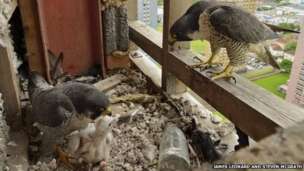
The nesting peregrine on Glasgow’s Red Road flats came to mind. A few weeks before the scheduled destruction of the empty flats, a peregrine showed interest in an old flat, fitting a nest between old irn bru cans and rubble. The demolition had to be put back. RSPB Scotland staff built a fantastic fancy all-singing all-dancing nest box in a flat in the bock opposite that was not due for demolition in the hope that they would move there for the following year. The demolition did not take place that winter, as planned, and the next spring the peregrines returned, ignoring the purpose made boudoir offered by RSPB and the housing association, and choosing to return to their litter-strewn hovel for a second time. The demolition was again put back.

_61808594_peregrinefamily464

I visited the house weekly and gave an update to the guys on site. One day I arrived and there were 6 tiny baby wagtails. Two weeks later they looked almost ready to fledge. The sparrow cheeping was also very loud. ‘The sparrows may go at any time too’ I said, ‘Make sure you block the hole as soon as you are sure they are all out, otherwise they will start on a second brood’.

The next day the pied wagtails fledged and the last bit of render board went on. The sparrows went soon after. However the next time I returned the hole was still there and, as predicted, the sparrows had started a second brood. Arrrghhhh

IMG_0743But it wasn’t the sparrows that were holding back the timber cladding. It could have been man-power (it was during the summer holidays) or it could have been that I wasn’t really on the ball enough to hassle about getting it started. The delay left plenty of time to get all the stuff done on the roof: MVHR flues, stove flue, solar panels, SVP (which I have now learned is a soil vent pipe and sends smells out of the roof of your house).

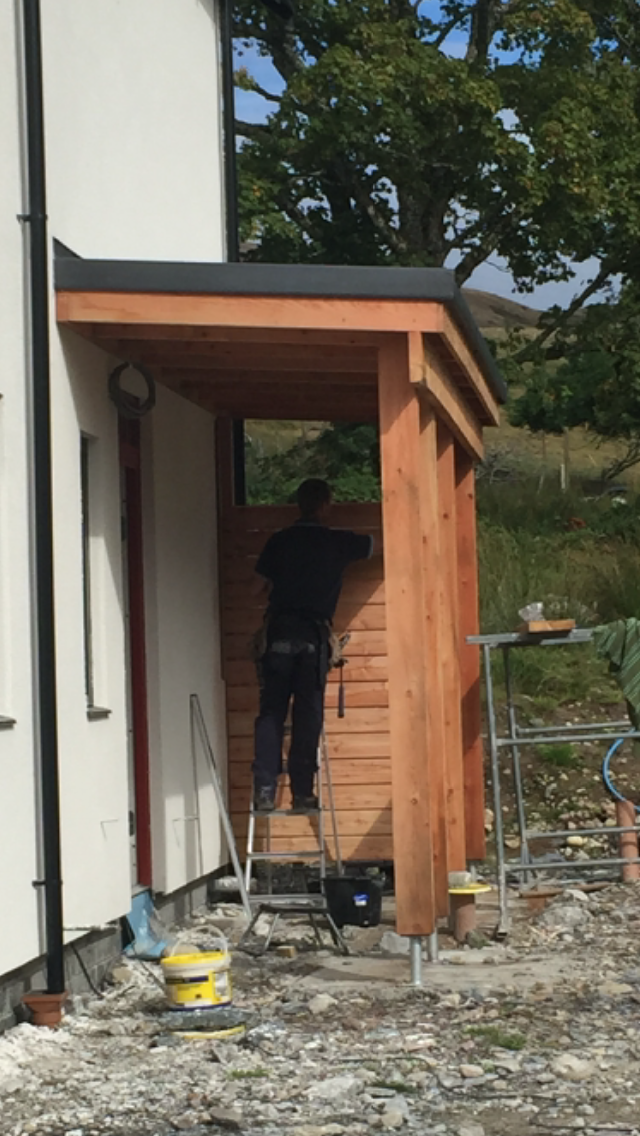
But when, eventually, the cladding started, it really moved forward apace. When Stephen gets started on something, it can happen really quickly. This week, when I was up at the house, Stephen popped by to talk to someone about doing the block-work around the stove. While he was around I spoke to him about putting the leftover cladding on the back of the porch. When I got back from a joyful swim in the bay, torrential rain hammering the slate grey water, and white horses splashing into my face, Chris the joiner had arrived on site and was already half-way through the cladding. I suppose I shouldn’t have been too surprised when he didn’t seem too sympathetic when I asked whether, since they always got things done so efficiently, could he charge me less money. It’s always worth a try …. perhaps.

The scaffolding came down last week showing a beautiful sight. Stephen himself seemed really pleased with the result. It really did look lovely.IMG_1249

IMG_1201