How much?!!……

20131019-224055.jpg

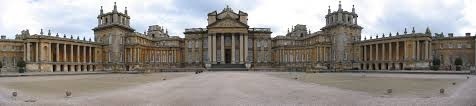
I’ve just found out our house build is going to cost nearly as much as Blenheim Palace. And I’m having a wee sit down.

I’m in the middle of Bill Bryson’s book ‘At Home’ which tells the the fascinating history of our domesticity. I have enjoyed chapters on the evolution of lighting and how the some of the earliest preserved homes in the world are at Scara Brae on Orkney. However, I am finding the current chapter on the building of the world’s most extravagant homes in history rather more uncomfortable.

It recounts the obsession of the über-rich in building the world’s most lavish edifices; Blenheim Palace, Castle Howard, Fonthill Abbey, and also the cult of the first celebrity architects.
20131019-225304.jpg
These great houses had hundreds of rooms and covered acres of land. They also went vastly over budget. Blenheim was budgeted to cost £40,000 and ended up costing around £300,000, which is presumably why I am finding the chapter rather painful reading.

Yesterday I received the latest cost plan from the Quantity Surveyor (a couple of weeks too late to be really useful for the latest part of our decision-making) and it appears that, despite cutting the floor plan size and reducing the spec, we have actually miraculously increased the projected costs of the build by over £15,000.

We are not budgeting for 300 rooms, nor to cover an area of seven acres; we don’t plan to cover every inch in intricate stone carvings and turrets and fripperies; however it appears that our modest construction is going to cost nearly as much as Blenheim Palace.

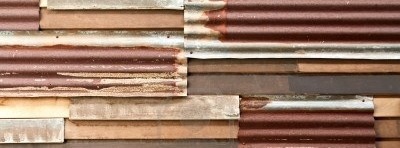
This is obviously not good news. However perhaps here is where the celebrity architects of the day can help. The inheritors of the great mantle of Robert Adam, the Scottish architect of Culzean Castle, the Trades Hall Glasgow and almost every other grand building of note are now helping us make better use of corrugated iron, take out redundant walls and forage for wall-coverings in local skips.

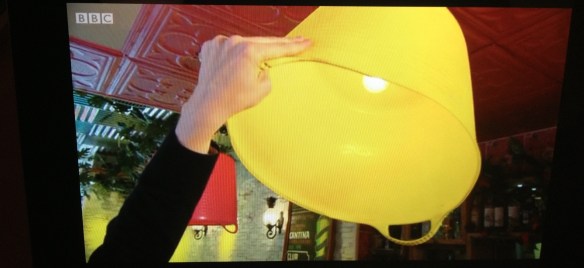
Welcome to Piers, the demonstratively arm-waving and plummy architect and Kieran the designer with the outré spectacles from the BBC show ‘the House that 100K Built’.
20131019-224609.jpg

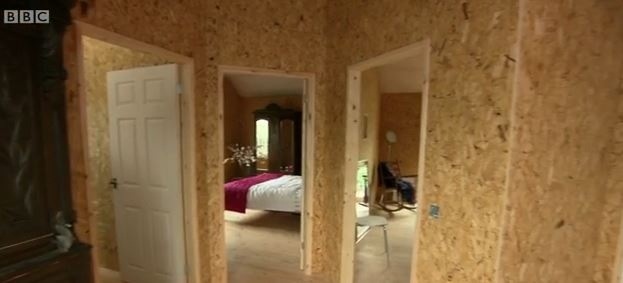
I admit to absolutely loving their show (despite the awkward name). It must be the combination of the impossibility of the ambitions of the couple of the week, Piers’ pleas to use chipboard, and bits from decommissioned industrial units to cut costs, and the inevitable triumph against all the odds.

I am certainly going to be heading off to my local architectural salvage yard (and in fact have been resisting the almost irresistible urge to stock pile things from skips and gumtree in the spare room) but it seems to me that the thing that folks do when they run out of money is they start doing the building themselves. Presumably this is because it is where the biggest savings are to be made. It is also probably why it makes such great telly.
20131019-223358.jpg

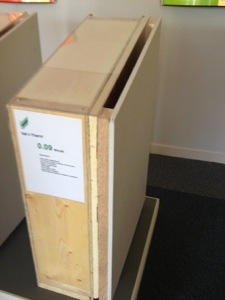
This is where the discomfort comes in. I am supremely hopeless in the practical skills department, and so, too, is my best belovéd. In my nightmares, Piers pops up waving his arms at a truck-load of chipboard and effuses about how lovely it is to live in a packing-case.

‘It’s time to think radical’, as Kieran would say (while taking a trip to a house made of fencing offcuts and reclaimed traffic cones). I am wondering whether reintroducing barter as a currency could be the radical solution. A few of my friends have more aptitude in the skills useful for fitting out a house than me, and perhaps they would gladly give their labours in exchange for ad libitum holiday opportunities in such a lovely place as Cuil Bay…..

At least I suppose it’s worth asking, because I don’t think I am quite ready to embrace packing-case chic. Yet.
Things to do near Arrochar


I happen to be arranging a get-together in Arrochar and so here’s my I’ve list of things I’d like to do if I had a bit of free time in the area. I hope you like them too.

1. Hill Walking
The Arrochar Alps offer superb walking with the Cobbler, Ben Ime and Ben Narnain all accessible from the village itself. A drive up to the aptly named Rest and be Thankful, the pass at the head of Glen Croe, gives access to further spectacular mountains.
Ben Donich is only a 90 minute walk to the top and has unparelled views to the Clyde and beyond. And there’s a fabulous ridge walk on Beinn an Lochain

2. Boat Trips and a walk on the wild side
Cruise Loch Lomond have a number of boat trips around the loch. From Tarbert you can take a boat to Inversnaid and walk through the wild and beautiful atlantic oak forests of the RSPB reserve, or take the boat to Rowardenan and walk one of the loveliest sections of the West Highland way north to Inversnaid for the return boat. There are numerous other options on the boat-trip including an RSPB cruise and guided walk every Tuesday April-Oct (which I can personally recommend!) 20131018-001430.jpg

3. Loch Fyne Oyster Bar, Fyne Ales and Ardkinglas forest garden
A drive over the Rest and be Thankful and down the other side takes you to the small community of Cairndow and the beautiful Ardkinglas woodland garden There lies the Loch Fyne Oyster Bar, which has the dubious claim to fame of being the site of the notorious agreement between Blair and Brown, but also does a fabulously good value ‘Bradan Rost trimmings’ along with a lot of expensive goodies. The brewery is open seven days a week and does tours and tastings. On the same site there is also a tree nursery run by Ardkinglas woodland garden with a tea-room.

4. A visit to Inveraray
Too picturesque for words with a castle, historic jail, a tall ship with the fabulous name ‘ArcticPenguin’ (no longer open to the public unfortunately) and rows of whitewashed Georgian houses. We love fish and chips on the pier and watching children catching crabs with bits of bacon rind. But there’s also a good cafe ‘Brambles’ and there’s always the George Hotel for a salubrious evening meal. The best thing of all, though, is the fabulous Inverary Jail. Especially if you go there on a day when they have actors all dressed up as jailers. The castle, though interesting, is expensive and small, but I would recommend the beautiful and steep walk up to the folly, no one will charge you for that and the views are priceless.


5. Cycling
There are quite a few off road cycle paths around. You can cycle all the way to Balloch (16 miles) along Loch Lomond side, or you can take the Three Lochs Way to Helensburgh and Gareloch head (where you can return by train if you time it expertly). In the woods between Arrochar and Ardgarten there are marked cycle routes: five and seven mile loops and a 20 mile circuit of the peninsular.

Visiting a timber frame factory

20130803-200956.jpg

It’s taken me a while to get round to writing this up but here goes.

In July I had the wonderful opportunity to visit Scotframe, a timber frame company with a factory in Cumbernauld, just outside Glasgow. It’s the first time that Matt has used a timber kit approach with the houses that he has designed and was keen to see the processes and the factory in action so I tagged along and, since it was school holidays, so did the kids. It was a hot and sunny day – one of the best of the summer thus far, and they moaned and groaned bitterly at the prospect of a morning sitting still and behaving on an industrial estate in one of central Scotland’s less picturesque spots.

We met Ray Waite, the business development manager and sat in a small and airless office meeting room. We talked through the basics of the process: a frame made from timber, with foam insulation between, refective membranes on each side and covered by chipboard. The panels are made in Cumbernauld but the insulation injection machine is in Aberdeen and so panels are transported there for finishing. You can choose the thickness of the walls, depending on the insultation you want in the house. I think we are having the most well-insulated version.

I have to admit to being somewhat bewitched by our host’s hair – a classic 80s do, with ample flicked fringe and luxurient demi-mullet. Something that the Hoff would have been proud of in his knightrider glory days and something that you just don’t see enough of. However, I am sure you will be glad to know that I didn’t let this distract me from collecting useful information for this blog.

We were all dying to see the factory though, and it was here that Ray really came into his own. It was obvious that he was happiest on the shop floor and he showed his real enthusiasm for his product – I’m not a great fan of professional salesmen but you can tell a guy who loves his precision nailing device (I think the impressively complicated machines actually do a lot more than nailing by the way).

Once our house is manufactured in the factory – windows and doors mounted in frames, panels packed up and labelled with the postcode, incredibly it will take only 4 days to build it to wind and water tight. Yes, you heard correctly. Four Days.

Once the kit is built, the slates and external cladding for the walls would need to go on but we would, essentially, have what would be recognisably a house. This is a dramatically shorter amount of time on site than conventional forms of building and far more controllable. It needs only a small weather window and, from there, the work can largely be protected from inclement weather. The system seems perfectly adapted for building in the notoriously unpredictable West coast of Scotland climate.

Given all of these advantages I wonder why Matt hadn’t specified this method of construction in previous houses. (that’s me sold on it)

The other query is whether this is going to give us the ‘Eco-house’ we so desire (see previous blog). It may be mainly timber but the insulation is made of evil petrochemicals.

I suppose this is a good point to remind us that we went to this system due to the costs of the extra-ecological-all-natural construction method Matt originally specified. This system looked to get us the best insulation and air-tightness for the cost.

The Scotframe panels can apparently achieve very good airtight ness as they fit together like a giant 3D jigsaw, with a female end (chipboard overhanging the wood frame) into which the male part – rounded ends of the wood frame fits. The membranes overlap and ensure a really airtight fit (figures were quoted but I was too busy keeping the kids quiet, or observing the mullet, to write them down – apologies). They use Scandinavian timber for the structural elements: slower growing and with a tighter grain, they give better strength than Scottish wood apparently. But they do use Scottish timber where they can, in the fibreboard/chipboard stuff.

The process they use has an impressive lack of waste. It will take a couple of weeks to program the designs for the house at Cuil Bay into their computers which then calculate how the machines need to cut the timber and assemble the panels most efficiently. This leaves about 3% waste – very impressive when compared against the 40-50% waste that there would be in a timber frame house being constructed on site.

The process all looks extremely efficient. Which is very comforting as it means that, presumably once we are past this current slow moving bit and we have made all the decisions and got all the permissions, the house will magically appear on the site. I can’t wait.

20130803-200847.jpg

20130803-200417.jpg

Eight Steps to Wild Thing Nirvana

20131001-195236.jpg

In a couple of weeks ‘Project Wild Thing‘ will be launched. It’s a film documenting one man’s attempt to get his kids to play outside and thus inspire a nation that would rather be on their X-boxes than out in the woods getting muddy.

So it’s fitting that we’ve had a weekend of living the Wild Thing dream.

I’ve written before of the challenges I’ve had getting my own offspring to venture forth into the wide and wild open. So it is with great joy that I can document here, with delighted smugness, the kind of weekend that would make a Guardian lifestyle features editor drool.

So here are my very own 8 steps to Wild Thing Nirvana.

Step One: Find your spot
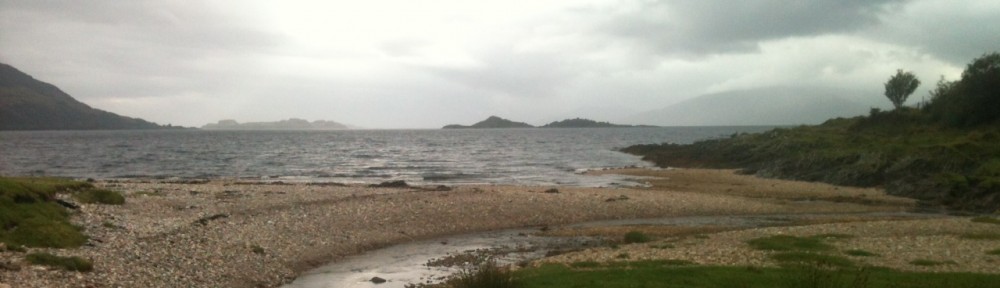
Obviously this can be anywhere – park, woodland or wild place, but we happened to be on a raised beach surrounded by hazel and birch woodland on the shore of a Scottish loch. And the weather was OK.

Step Two: A wild swim.
After a long, hot walk-in, the sea was startlingly cold. Daughter managed a few strokes then stood waist-deep looking for sealife in the weed. Ignoring the pain of constricting capillaries in the extremities I paddled frantically until a warm glow started to spread over my body. Slowing to a more stately neck-out breast stroke, I parted the seaweed clad in an invincible tingling aura. Anyway I think the aura was from the cold water, it could have been from the smugness.

Step Three: A wild swing
A sure-fire way of warming up, the kids sailed out over the 20ft drop and nearly into the branches of the (hopefully sturdy) oak tree. Fighting over whose turn it was must have been warming too.

Step Four: Make a den and have a picnic
Absolutely standard fare for being a Wild Thing. Our den was built with the help of a length of blue fishing rope found on the beach and some twigs from the woods. It was a pretty good lunch spot and we plucked a few trefoils of wood sorrel to have in our sandwiches.

Step Five: Watch the sunset.
Sitting still and watching anything for more than one minute is not something that myself and my older daughter have ever managed before. Sitting on the beach together, listening to the sea and watching the colours of the sky change was actually a very special experience. However soon the urge to shout out bizarre names for the cloud formations became overwhelming and the spell was broken. ‘half chicken half worm!’
‘A horse wearing deely-boppers’
‘Pig’s head on a skeleton’

Step Six: Star gazing
In the uncharacteristically warm late September evening we sat outside and watched the constellations gradually appear. We also happened to be listening to radio 3 and a performance of Tintagel by Arnold Bax, which is obviously too pretentious for words but daughter wanted a soundtrack and this was the only one we could agree on. In any case, it suited the occasion, the lapping of the waves on the beach and the wind in the grass.

This is where a bit of that evil screen-time hugely increased our enjoyment of the experience. The wonderful Night Sky app showed us the names of the constellations and significant stars and satellites. We even saw a few shooting stars.

Step Seven: Phosphorescence

I’ve only experienced phosphorescence once before and it was under similar conditions: a warm autumn night after a long hot summer. We wandered down to the water’s edge, splashed our hands and, sure enough, a few sparks of phosphorescence shot into the dark and disappeared. It took a lot of splashing for a couple of sparks but, what magic sparks they were.

Step Eight: Sleep out under the stars.
This is obviously the absolute pinnacle of Wild Thing achievement. It wasn’t really something we intended but the idea had started germinating last week when I received an email telling me that someone had sponsored me to sleep out in my garden.

This wasn’t a phishing scam from a criminal gang-turned environmental education collective. It was related to a test page I set up on JustGiving while organising the RSPB Big Wild Sleepout in August. Somehow, someone had tracked down my page and felt moved to sponsor me, but they hadn’t left any contact details, leaving me in a bit of a dilemma.

I was fretting about the morality of being unable to contact my benefactor to tell them I was a fraud when the inevitability of a night out au naturel dawned.

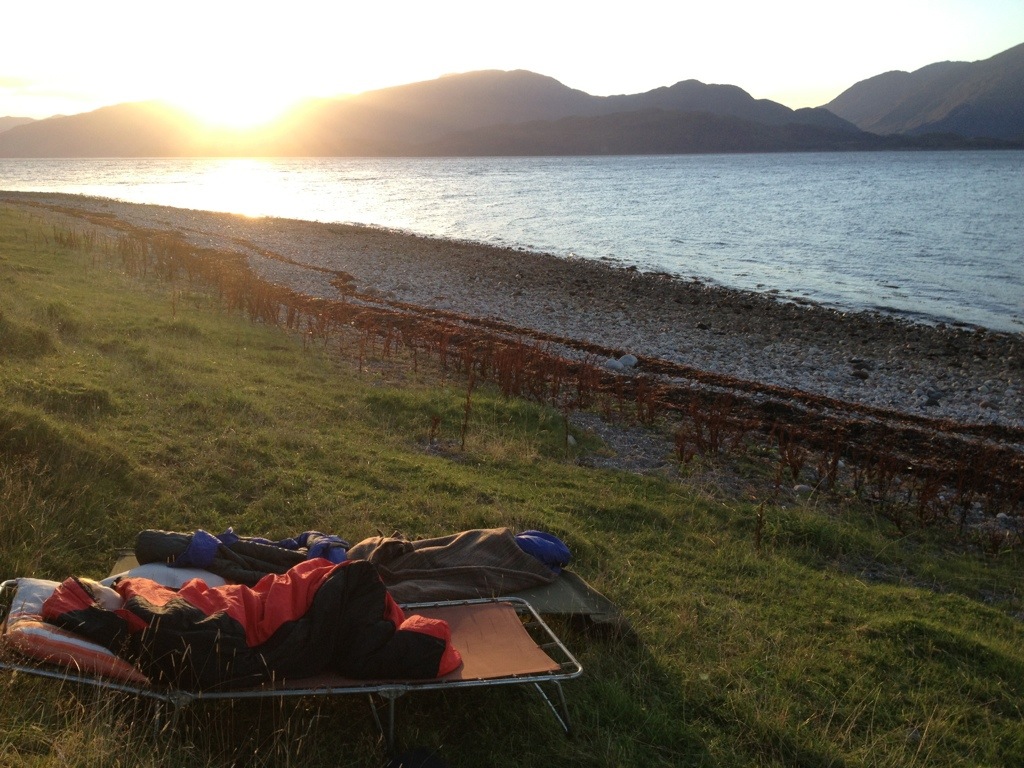
We dragged camp beds and sleeping bags down to the beach – daughter categorically banned me from taking an actual bed and mattress down. I had planned to just lie and look at the stars and listen to the waves for a while but almost immediately we were both asleep.

20131001-195021.jpg

We didn’t manage a whole night though. The night sky had rotated around the North Star by about 60 degrees when I was awoken by a frozen cold daughter and we sprinted back into relative warmth.

So, I hope that puts my sponsorship dilemma to bed so I can sleep at night again (sorry couldn’t resist). Next year I think I’ll go the whole hog and get properly sponsored for a proper sleepout.